How innovative cognitive health programs, memory support and meaningful engagement are helping older adults maintain independence, purpose and connection in Redmond, Washington.
Cognitive changes can be part of aging, but experiencing memory loss or cognitive impairment does not mean giving up independence, creativity, purpose or meaningful relationships.
At Emerald Heights, a Life Plan Community in Redmond, Washington, we believe cognitive health deserves the same proactive attention as physical wellness. That means providing residents with opportunities to remain engaged, access supportive therapies and maintain meaningful connections, even as their cognitive needs change.
Over the past year, Emerald Heights has been developing a Cognitive Support Ecosystem, bringing together cognitive rehabilitation, memory support programs, evidence-based cognitive stimulation, social engagement and respite opportunities for spouses and care partners. Check out our program flyer here.
Rather than relying on a single program or waiting until cognitive needs become more advanced, our approach recognizes that every person’s experience is different.
Our goal is simple: provide residents and their families with more choices, more resources and more opportunities to continue living meaningful, connected lives.
What Is a Cognitive Support Ecosystem?
A Cognitive Support Ecosystem is a coordinated collection of programs and resources designed to support older adults experiencing memory loss, mild cognitive impairment or dementia, while also addressing the needs of spouses and care partners.
At Emerald Heights, this approach recognizes that cognitive wellness extends beyond clinical treatment. It also includes creativity, companionship, emotional well-being, purposeful activities and a sense of belonging.
Some residents may benefit from personalized cognitive rehabilitation. Others may find joy and stimulation through art, music and structured group activities. A spouse caring for a partner experiencing memory changes may benefit from several hours of respite, knowing their loved one is engaged in a supportive environment.
There is no single solution for every person, which is why Emerald Heights is creating multiple pathways for cognitive support.
Our evolving ecosystem includes four complementary programs.
NewDays: Personalized Cognitive Rehabilitation From Our Residents Home
One of the resources available to Emerald Heights residents is NewDays, a virtual cognitive rehabilitation program designed to support individuals experiencing cognitive challenges.
Cognitive rehabilitation can be understood in much the same way as physical rehabilitation.
Following an injury, physical therapy helps individuals work toward maintaining or rebuilding physical function. Cognitive rehabilitation similarly uses targeted strategies and exercises to help individuals manage cognitive challenges and support everyday functioning.
Through NewDays, participating residents can connect virtually with a cognitive specialist and complete guided cognitive exercises from the comfort and privacy of their own residential home.
The program combines:
- Twice-monthly virtual sessions with a cognitive specialist
- Daily cognitive exercises
- Individualized strategies designed to support everyday functioning
- Convenient access without traveling to an off-campus appointment
In research presented by NewDays in 2026 involving 24 participants experiencing dementia, mild cognitive impairment or other cognitive symptoms, the company reported encouraging results. While these preliminary findings are promising, the small study size means additional independent research is needed to establish the program’s effectiveness.
For Emerald Heights residents, NewDays provides another option for accessing personalized cognitive support while remaining in a familiar environment.
DayHaven: Memory Support Through Creativity, Connection and Compassion
Emerald Heights has partnered with Seattle-based nonprofit Elderwise to bring DayHaven, a weekly, on-campus memory support program, directly to our community.
Elderwise’s philosophy recognizes the wholeness of every individual and the continued capacity for creativity, joy and meaningful relationships, regardless of cognitive changes.
DayHaven brings that philosophy to life through a welcoming, small-group experience.
Participants gather for four hours of meaningful activities, including conversation, music, lunch, companionship and creative expression. Resident volunteers also contribute to the program, reinforcing the importance of community involvement and connection.
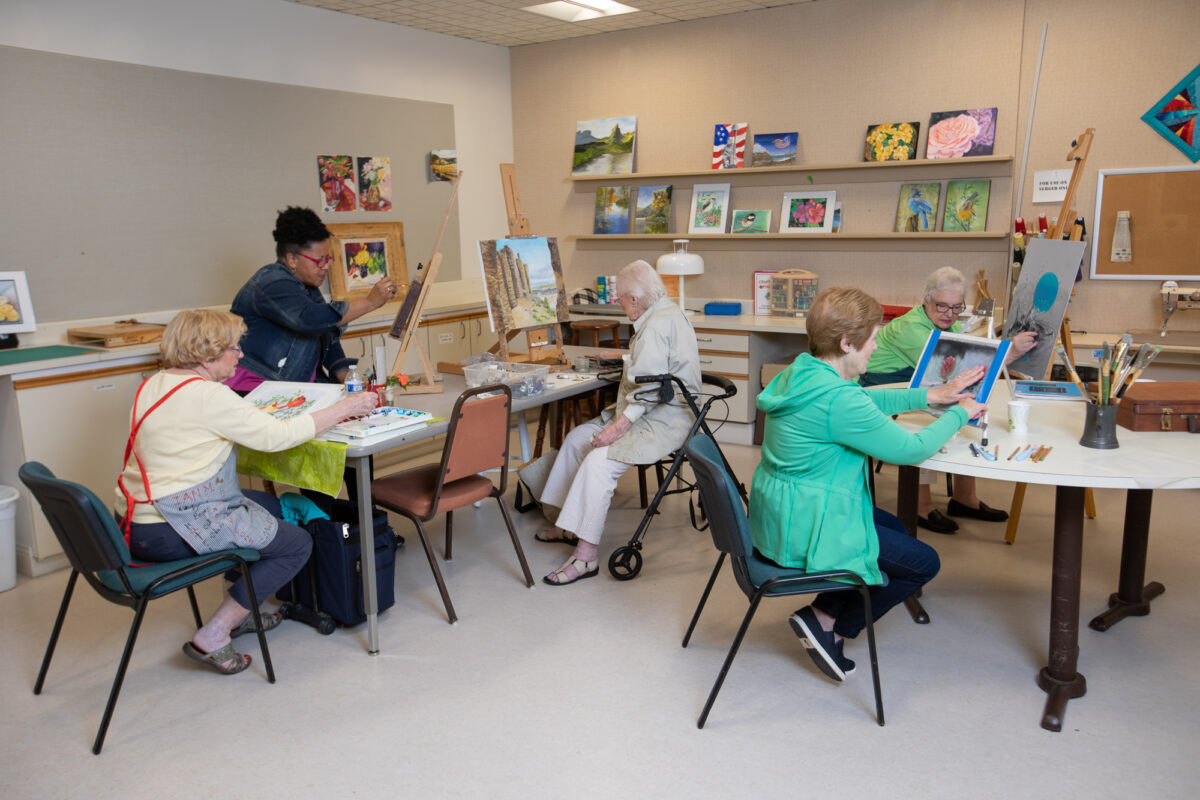
One of the program’s signature activities is Elderwise’s wet-on-wet watercolor painting, an intuitive artistic experience that encourages creativity without focusing on right or wrong answers.
The emphasis is on what each person can do, rather than what cognitive changes may have made more difficult.
Supporting Spouses and Care Partners Through Respite
DayHaven also addresses an important part of cognitive wellness that is sometimes overlooked: the well-being of spouses and care partners.
Supporting someone experiencing memory loss can be emotionally and physically demanding, even when that support is provided with tremendous love and dedication.
By offering DayHaven directly on the Emerald Heights campus, spouses can enjoy a four-hour period of respite while their partners participate in meaningful activities in a familiar, supportive environment.
That time may allow a spouse to attend an appointment, enjoy a favorite activity, connect with friends or simply recharge.
Providing support for the care partner is an important part of supporting the entire family.
Cognitive Stimulation Therapy: Keeping Minds and Relationships Engaged
Another important component of the Emerald Heights Cognitive Support Ecosystem is Cognitive Stimulation Therapy (CST).
Introduced at Wild Flower Point in February 2026, CST is an evidence-based group intervention designed for individuals experiencing mild-to-moderate dementia.
Unlike approaches focused primarily on testing memory or recalling facts, Cognitive Stimulation Therapy encourages participants to engage through conversation, creative thinking, opinions, shared experiences and social interaction.
Small groups typically participate in structured 60-minute sessions twice a week.
Activities may include:
- Discussing current events and familiar topics
- Exploring music and shared memories
- Word association and language activities
- Categorizing familiar objects or concepts
- Creative discussions and problem-solving
- Gentle physical activities and interactive games
There are no tests to pass and no expectation that everyone must arrive at the same answer.
The goal is to encourage participation, thinking and meaningful interaction in an enjoyable, supportive environment.
What Does Research Say About Cognitive Stimulation Therapy?
Cognitive Stimulation Therapy is supported by research examining its potential benefits for people living with dementia.
The United Kingdom’s National Institute for Health and Care Excellence (NICE) recommends group Cognitive Stimulation Therapy for people living with mild-to-moderate dementia.
Research has also identified potential benefits for cognitive functioning and quality of life.
At Emerald Heights, the social dimension is especially meaningful.
Cognitive wellness is not only about stimulating the brain. It is also about continuing to participate, contribute, laugh, share opinions and build relationships.
CST creates opportunities for residents to experience those connections while participating in structured cognitive activities.
Coming in 2027: The Emerald Heights Memory Café
The Cognitive Support Ecosystem is expected to continue expanding in 2027 with the introduction of a monthly Memory Café.
A Memory Café is a welcoming social gathering designed for people experiencing memory changes and the spouses, friends and family members who support them.
Unlike a respite program such as DayHaven, where a care partner may leave while their loved one participates, a Memory Café encourages people to attend and enjoy the experience together.
The planned Emerald Heights Memory Café will provide opportunities for conversation, creative activities, friendship and shared experiences in a comfortable, supportive setting.
Creating a Community Where Cognitive Changes Are Understood
One of the most important goals of the Memory Café is to help normalize conversations about memory loss and cognitive changes.
People experiencing cognitive impairment may sometimes withdraw from social activities because they feel uncertain, embarrassed or worried about how others will respond.
Friends and neighbors may also feel unsure about what to say or how to maintain a relationship when someone begins experiencing memory changes.
A Memory Café helps create opportunities to overcome those barriers.
By bringing residents, spouses and friends together in a welcoming environment, we hope to encourage greater understanding, reduce stigma and strengthen community connections.
Most importantly, the experience is designed around something everyone deserves: the opportunity to enjoy friendship, companionship and a sense of belonging.
Supporting the Person, Not Just the Diagnosis
Every person’s experience with cognitive change is different.
One resident may benefit from personalized cognitive rehabilitation at home. Another may discover renewed enjoyment through painting and music. Someone else may thrive in a Cognitive Stimulation Therapy group where conversation and laughter are just as important as the activities themselves.
A spouse may simply need a few uninterrupted hours to rest and recharge.
Together, NewDays, DayHaven, Cognitive Stimulation Therapy and our planned Memory Café provide different types of support for different needs and stages of the journey.
These programs reflect a larger philosophy at Emerald Heights:
People experiencing cognitive changes remain valued, contributing members of our community.
They still have opinions to share, art to create, friendships to build, stories to tell and new experiences to enjoy.
As a Life Plan Community, Emerald Heights is committed to supporting residents through different stages of aging. Our Cognitive Support Ecosystem is another example of how we continue evolving our programs and resources to meet the changing needs of the people who call Emerald Heights home.
Because supporting cognitive health is about more than memory.
It’s about helping people continue to live with independence, dignity, purpose and connection.
Learn More About Life at Emerald Heights
Located in Redmond, Washington, Emerald Heights is a Life Plan Community offering independent living, assisted living, memory care and skilled nursing services, along with a variety of wellness, social and lifelong learning opportunities.
Our approach to cognitive health reflects our commitment to supporting the whole person through meaningful engagement, personalized resources and a strong sense of community.
Discover how Emerald Heights is helping residents continue to live well at every stage of aging.
Explore Emerald Heights
Frequently Asked Questions About Cognitive Health and Memory Support at Emerald Heights
What cognitive health and memory support programs are available at Emerald Heights?
Emerald Heights in Redmond, Washington, offers a developing Cognitive Support Ecosystem that includes NewDays virtual cognitive rehabilitation, DayHaven memory support in partnership with Elderwise, and Cognitive Stimulation Therapy. A monthly Memory Café is also planned for 2027.
What is Cognitive Stimulation Therapy for dementia?
Cognitive Stimulation Therapy (CST) is an evidence-based group intervention for people living with mild-to-moderate dementia. It uses structured conversations, music, creative activities and social interaction to encourage cognitive engagement and support quality of life.
What is the DayHaven memory support program?
DayHaven is a weekly, four-hour, on-campus memory support program at Emerald Heights, developed in partnership with Elderwise. Participants enjoy music, conversation, creative activities, lunch and companionship. The program also offers respite opportunities for spouses and care partners.
Do residents need a dementia diagnosis to participate in DayHaven?
A formal clinical diagnosis or assessment is not required to participate in DayHaven. The program focuses on meaningful engagement, companionship and creative experiences for residents experiencing memory changes. Participation is based on individual needs and program suitability.
How does Emerald Heights support spouses caring for someone with dementia?
Emerald Heights supports spouses and care partners through programs such as DayHaven, which provides meaningful engagement for residents while allowing spouses time for respite. The planned Memory Café will offer additional opportunities for couples and families to connect with others experiencing similar challenges.
What is a Memory Café for people experiencing memory loss?
A Memory Café is a welcoming social gathering for individuals experiencing memory changes and the people who support them. It emphasizes friendship, conversation, activities and community connection rather than diagnosis or clinical treatment.
Does Emerald Heights offer memory care in Redmond, Washington?
Yes. Emerald Heights is a Life Plan Community in Redmond, Washington, offering memory care as part of its continuum of care. The Cognitive Support Ecosystem complements these services by providing additional opportunities for cognitive engagement, social connection and support for residents and care partners.