
Who Will Speak for Me? Webinar on Planning for the Future Without Children, April 8

Love After Loss: Dating After the Death of a Spouse

seniors dating after the death of a spouse

If enough time has passed since the loss of your spouse that well-meaning friends and family members have begun to ask when you’re going to start dating again, you may be wondering whether you’re ready to begin looking for someone new to add joy to your life.  

There’s no specific amount of time widows and widowers are expected to mourn the death of their spouse. Decades ago, when people asked how long should a widow wait to date, the general rule of thumb was about a year. But times have changed and conventional “wisdom” doesn’t necessarily apply anymore.

The truth is widows and widowers need to decide for themselves when it’s time to start looking for a new romantic relationship. Some may choose to forgo dating indefinitely, and that’s perfectly fine. Others may feel they’re ready within a few months, or they may meet someone they’re attracted to even if they weren’t planning to date again—and that’s absolutely OK, too.

Dating After Widowhood

Deciding when or whether to date after the death of a life partner is different for each person.

Your decision about dating again may be based on a variety of factors, such as:

  • The depth and duration of the bond you shared with your late spouse
  • How far along in the grieving process you are
  • Whether other people and activities are helping you feel less lonely
  • Your own thoughts and beliefs about dating again, which may be shaped by your upbringing and personal history, your religious or spiritual beliefs and values, and your openness to new experiences

Your decision about dating shouldn’t be based on:

  • Pressure from others to “move on” with your life
  • Concerns you may have about feeling judged (which is not to say you should totally ignore such concerns, but they shouldn’t sway your decision)
  • A sense of urgency to be in another intimate relationship—jumping in too quickly may lead to unsatisfying choices
  • Others’ opinions about whether you’re ready (while it may be helpful to hear why they think you are or aren’t ready, ultimately the choice is yours)

A Specific Concern Seniors Have About Dating

One reason older adults give for not pursuing a committed relationship after their spouse dies is they don’t want to end up being someone else’s caregiver.

Vicki Panagotacos, a grief and loss counselor, pointed out in a blog post on her website, Open to Hope, that being in a relationship “can become a positive when you think about another person caring [for] and supporting you.”

Dating After the Death of a Spouse Differs From Dating After a Divorce

Finding love after the death of a spouse can seem impossible, and it can be more challenging than for those who’ve gone through a divorce. Getting divorced usually follows a troubled marriage, whereas people who’ve been widowed may be coping with the loss of a very happy marriage.

Additionally, many divorced couples part amicably and choose to keep the lines of communication open. Widows and widowers don’t have that option.

Understanding the unique dynamics of widowhood dating can be helpful whether you’re a surviving spouse or you’re dating someone whose life partner has died.

Those who’ve lost a spouse need to be able to grieve on their own terms. Dating in the later stages of the grieving process can work as long as both people in the relationship are patient and accept that moments of grief are still likely to crop up, often without warning.

If you’re dating someone who is widowed, you may feel at times as if you’re competing with the past. It can be helpful to remember that the person you’re dating built a life with their late spouse. They may take comfort in photos or other items that remind them of their spouse as they sort through decades of memories. If you feel as though the love they have for their late spouse is hampering your relationship, be gentle. Without forcing the issue, try expressing your feelings in a sensitive, compassionate way. 

Own Your Feelings—But Don’t Let Them Own You

Only you will know if and when you’re ready to date again. The mere thought of going out with someone new might cause some anxiety. That’s normal; it happens to many—and maybe even most—people who are venturing out into the dating world.

You deserve to be happy, and if your goal is to find someone special who will add vibrance to your life, then dating is the most likely way to make that happen.

You may find after going on a date or two, or even a few months into a relationship, that you’re  just not ready to continue. Be honest (and patient!) with yourself and, if you’ve been seeing someone for a while, let them know what’s going on with you.

If you decide you want to wait a while, then socializing with friends, taking up a new hobby, signing up for classes, traveling or volunteering are some ideas for getting out more often (and you never know who you might meet along the way). 

On the other hand, if you’re dating and you start enjoying the company of a certain someone, you may experience feelings of guilt. It might seem like you’re betraying the love you have for your late spouse.

Grief counselors use an analogy to help widows and widowers see how they can be romantically involved with another person while honoring their love for a spouse they’ve lost: Having a second child doesn’t diminish the love parents feel for their firstborn child. Their love expands to include both.

In a similar manner, opening up to the possibility of a new intimate relationship doesn’t have to weaken your bond with your late husband or wife.

When You’re Ready To Take That First Step

If you’ve decided you want to try dating again, it’s important to consider what you want in a new relationship and a potential partner. You won’t be able to replace the spouse you’ve lost, but you may find someone who’s right for you in different ways. Another person could bring out facets of you that you didn’t know existed.

Once you’ve determined what and who you’re looking for, here are some dating tips:

  • Take things slowly and see how you feel. Your feelings about dating may change from day to day.
  • Let the people you date know about your loss and explain where you are in the grieving process.
  • Give your dates the chance to see who you are—you’re more than a widow or widower.
  • It may be difficult, but try not to compare those you date with your late spouse. Rather, try to see them for who they are.
  • Be safe. Meet new people in public places and tell someone you trust where you’ll be. You can have them call you while you’re on the date to make sure you’re OK.
  • Trust your instincts. If something doesn’t feel right or raises a red flag, pay attention instead of dismissing it.
  • Have fun! It’s normal to feel nervous or awkward at first, but if you’re able to relax you might enjoy dating.

Be Prepared for Others’ Reactions

While some of your friends and family may be glad to see you taking an interest in meeting someone new, others might be concerned that you’ll get hurt or taken advantage of. Some may think you’re not ready or that you haven’t waited an “appropriate” amount of time.

If you have children, regardless of their age, they might not understand why you want to date again. They’ve lost a parent, but you’ve lost your spouse—and even though you’ve all lost the same person, you haven’t all lost the same relationship. Your children may not be able to relate to the empty place that exists in your life.

When necessary, let people know that you appreciate their concern and remind them that you deserve a future in which you’re happy.

Create Your Future at Emerald Heights

Being part of a senior living community like Emerald Heights could be a good move for you whether or not you’re interested in dating. You’ll have opportunities every day to expand your social circle and participate in a broad range of groups and activities.

Many Emerald Heights residents know what it’s like to lose a life partner. They’ve found their own ways to heal and greet the future on their terms. More than a few are happy to support others who are going through a similar experience. Monthly support groups are offered to residents at Emerald Heights led by our chaplain and social work team to help older adults cope with their grieving process and find community through challenging times. To learn more about our friendly, growing community and see if you would enjoy living here, contact us and we’ll set up a time for you to visit.

Featured Image: Studio Romantic / Shutterstock

Clearing Up a Common Misperception About Memory Care

resident in memory care at Emerald Heights

Among the numerous myths about memory care, one stands out, and it frequently causes families to put off seeking help for their loved one.

At Emerald Heights, one of the main concerns we hear when people talk with us about memory care is the potential for isolation. Because the ability to communicate typically deteriorates in people who are living with dementia, particularly in the later stages, they often become frustrated and may stop trying.

Families worry that their loved one will withdraw in an unfamiliar setting—which does happen and can be addressed with patience and skill. They might also believe their loved one will be intentionally isolated. This is not a standard practice any more.

Like other common myths about dementia, the notion that residents in memory care are kept apart from others is usually based on outdated information. Many decades ago, when people with dementia reached the point where family members could no longer provide the care they needed, the alternative was to place them in a psychiatric facility or similar setting. Although their basic needs were met, in many cases the main focus was on keeping patients under control—which often meant keeping them separated and sedated.

Fortunately, since then, behavioral studies and other research have provided valuable insights into dementia’s impact, not only on the person living with it, but also on those who provide supportive care. Today, professional caregivers of dementia patients have effective ways of interacting with adults who are experiencing dementia, even in its more advanced stages.

What’s more—and we see this regularly at Emerald Heights—simply being around other adults who are also living with dementia can set new residents at ease. New relationships blossom among neighbors in memory care just like they do anywhere else.

What Memory Care Looks Like Now

Memory care communities that provide high-quality care take a multipronged approach to enhancing residents’ quality of life, starting with a philosophy grounded in respect for who each resident is as an individual.

This comes naturally at Emerald Heights because virtually all residents in memory care started out in our independent living or assisted living neighborhoods. We already know them, and they’ve formed relationships with other neighbors and staff members throughout the community. Knowing they can maintain their existing friendships in memory care is a tremendous source of comfort.

Dementia affects people differently, making it vital for caregivers to get to know each resident’s preferences, unique patterns of behavior, triggers and responses. This allows them to develop a personalized care plan that can be modified as the resident’s journey with dementia proceeds.

Environment Plays a Prominent Role

Today’s memory care communities are designed so that residents can easily find their way around. There are no interminable corridors or maze-like hallways with dead ends. Helpful navigation tools include clear signage and color cues—for example, different door colors for each resident’s personal living space.

Interior finishings and furnishings are comfortable, with calming hues and textures. Common areas often feature large windows that let in lots of light and offer outside views. Most memory care communities have secure outdoor areas, such as courtyards, where residents can go for walks or sit outside while enjoying the sunshine and fresh air.

While an emphasis is placed on keeping residents secure (to prevent those with a tendency to wander from getting lost), newer memory care communities integrate technology and devices that don’t cause residents to feel confined.

Staff members are part of the environment, too, in the sense that they’re always present and accessible. Their presence reassures residents who may be feeling anxious or confused.  

Activities Engage and Stimulate—But Not Too Much

While memory care communities have distinctive physical environments, there can also be significant variations in the types of activities they offer.

An experienced and creative activities director will be adept at finding appealing activities residents can participate in as a group, such as music therapy, animal therapy and baking sessions that stimulate the senses.

Quality one-on-one time between caregivers and residents is important as well. This may involve attentive conversations in which caregivers use their knowledge of residents’ past to evoke happy memories. It may involve activities residents enjoy, such as going for a stroll or playing a favorite game.

Some activities are developed specifically for people with dementia and are designed to help preserve cognitive function. Others are purely for enjoyment or to provide a sense of purpose or accomplishment.

Staff Members Have Specialized Training

Licensing requirements for those who work in and manage memory care communities vary from state to state, but most states require at least the community’s administrator to have specialized dementia training.

Those who provide direct care to residents are usually certified nursing assistants (CNAs). They often have additional training in dementia care so they can better connect with residents and understand their specific needs.

If you’re researching memory care for a loved one or planning ahead for any and all eventualities of your own, ask about the type and extent of training staff members are required to have when you visit communities.

Memory Care Benefits in a Life Care Community

If you’ve checked into pricing, then you know that memory care can be expensive—and it will only become more so. But there’s a way to protect your financial assets and ensure you’ll have access to top-rated memory care if you need it later on: choose a Life Care Community, such as Emerald Heights, which offers a full continuum of care.

As an independent living resident in our community, you can take full advantage of all the services and amenities that are available. You’ll be assured lifetime access to higher levels of care at the Corwin Center, right here in the community, if you should need any of them in the future—with no increase to your monthly service fee for the higher level of care services. This includes memory care, short-term rehabilitation, assisted living and skilled nursing care.

Couples have another benefit when they choose a Life Care Community. Even though spouses may plan on growing old together, they don’t always age at the same rate. In the case where one partner eventually needs a higher level of care, both partners can stay in the same community.   

If you’re interested in learning more about Emerald Heights and how Life Care can help you plan for the future, contact us to arrange a visit.

Featured Image: pics five / Shutterstock

What Is Assisted Living?

what is assisted living

Finding the right living arrangement for yourself or a loved one can feel daunting at first. For many seniors, Assisted Living offers the perfect balance between independence and the support they need to thrive.

At Emerald Heights, a Life Care community in Redmond, Washington, Assisted Living is designed to provide residents with the care they need while enhancing their quality of life.

What Is Assisted Living?

Assisted Living is a residential option for older adults who need some help with daily tasks like dressing, bathing, managing medications, getting around or preparing meals. It is ideal for seniors who are still relatively independent but may need some assistance to maintain their lifestyle. Emerald Heights offers a range of services tailored to meet each resident’s specific needs, providing a safe and nurturing environment.

A Lifestyle To Love

Life in an Assisted Living community like Emerald Heights is about more than just receiving care. It’s about embracing a lifestyle that offers social opportunities and activities, and a sense of community. Residents can enjoy a variety of programs designed to promote recreational, spiritual, wellness and educational activities and provide a fulfilling daily life. Whether it’s a fitness class, an art workshop or a community event, there’s always something happening to keep residents engaged and connected.

Can Assisted Living Really Improve Quality of Life?

Yes, Assisted Living can significantly improve quality of life for many seniors. With access to personalized care, nutritious meals, social engagement and recreational activities, residents often find they are healthier, happier and more socially connected than they were living alone. At Emerald Heights, the focus is on fostering a vibrant community where seniors can thrive, supported by a caring staff and a rich array of services and amenities.

What Kind of Senior Living Is Right for Me?

Choosing the right senior living option depends on your personal needs, preferences, and health status. Here’s a look at the various types of senior living options available at Emerald Heights:

Independent Living

What is it?

Independent Living is designed for active seniors who want the convenience of living in a community with others their age. These residents don’t need assistance with daily activities. Independent living communities offer amenities like housekeeping, maintenance-free living, dining services, resident groups and opportunities for staying active and engaged.

Who needs it?

Seniors who are independent but want a worry-free lifestyle, free from the responsibilities of home maintenance and chores—and the added benefit of knowing higher levels of care are available with no change to monthly rates if health needs change.

Assisted Living

What is it?

Assisted Living is a type of care for older adults who need help with daily activities like bathing, dressing and medication management, but do not require the intensive medical care provided by nursing homes or a memory care setting. It combines housing, support services and personal care in a community setting to help individuals maintain their independence and quality of life. At Emerald Heights, Assisted Living is an extension of the lifestyle Independent Living residents love.

Our new Assisted Living building, FirView, will include a SkyBridge, connecting residences to the greater community to bridge the gap between independent seniors and those who need more assistance.

Memory Care

What is it?

Memory Care is a specialized form of senior living designed to provide a secure and supportive environment for individuals with Alzheimer’s disease or other forms of dementia.

Who needs it?

Seniors with memory impairments who need structured care and a safe environment.

What Are the Pros and Cons of Assisted Living?

Understanding the pros and cons of Assisted Living can help in making an informed decision.

Benefits of Assisted Living

  • Personalized Care: Residents receive tailored care that meets their specific needs, ensuring they have the support required without sacrificing independence.
  • Social Opportunities: Assisted Living communities offer a range of social and recreational activities, helping residents stay active and engaged.
  • Safety and Security: With 24/7 staff availability, residents are safer and have access to immediate assistance if needed.
  • Peace of Mind for Families: Knowing that a loved one is well-cared for in a supportive environment can provide peace of mind for families.

Drawbacks of Assisted Living

  • Cost: Assisted Living can be expensive, depending on the level of care and amenities provided. Moving into a Life Care community can help with the predictability of some of these costs. 
  • Adjustment Period: Moving to a new environment can be challenging for some seniors. It may take some time to adapt to new surroundings and routines.

Who Lives in Assisted Living Facilities?

Assisted Living communities are home to a diverse group of seniors who need some level of assistance but do not require the full-time care of a nursing home. Residents may include those who have difficulty with mobility, need help managing medications, or have mild to moderate health issues that require some level of supervision and support.

What Are the Qualifications for Assisted Living?

Qualifications for Assisted Living typically involve a needs assessment to determine the appropriate level of care. This assessment may include an evaluation of physical health, cognitive function and ability to perform daily activities. At Emerald Heights, we ensure that every resident receives a comprehensive assessment to create a personalized care plan tailored to their unique needs.

How Do I Know It’s Time for Assisted Living?

Signs that it might be time for Assisted Living include:

  • Having difficulty managing daily activities
  • Experiencing frequent falls or accidents
  • Feeling lonely or isolated
  • Losing weight or suffering from poor nutrition
  • Needing more medical care or supervision

If you or a loved one are experiencing these issues, it may be time to consider the benefits of an Assisted Living setting at a community like Emerald Heights.

How Do I Choose an Assisted Living Facility?

Choosing the right Assisted Living facility involves considering several factors, including location, cost, services and community atmosphere. At Emerald Heights, we encourage prospective residents and their families to visit, meet the staff, and experience the community to ensure it’s the right fit.

By understanding your options and asking the right questions, you can find the best living arrangement for yourself or a loved one.

Assisted Living at Emerald Heights

Emerald Heights in Redmond, Washington, offers a comprehensive approach to Assisted Living designed to meet the diverse needs of seniors while providing a community where they can thrive.

To meet the need for more Assisted Living options in the Redmond area, our community is expanding. FirView, our new Assisted Living building, will be completed in early 2025.

Featured Image: PeopleImages.com – Yuri A / Shutterstock

The Emerald Heights Garden Railroad: How One Resident’s Hobby Became a Delight for All

hobby trains for seniors

When Jim Easley moved to Emerald Heights, he brought his backyard train set with him and set it up outside his cottage. Other residents were intrigued by Jim’s handiwork and urged him to lead a group effort to build a garden railroad the whole community could enjoy.

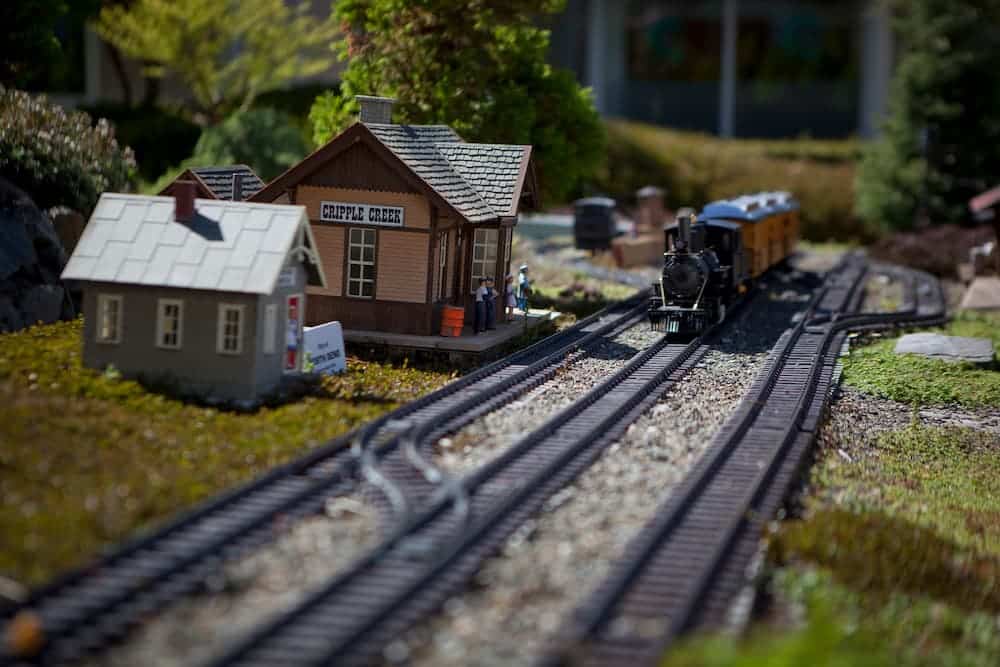
After getting the project approved and securing a location, it took the better part of a year to prepare the plot of land and build the initial version of the garden railroad, complete with dozens of handcrafted buildings, hundreds of feet of track and a trestle bridge leading into the train barn where supplies are stored and the trains are housed when not in use. 

The first train’s maiden voyage was 20 years ago, in 2004, and the garden has since grown in size, sophistication and popularity.

The unique story of the Emerald Heights Garden Railroad shows that hobbies for seniors are more than fun. They’re far-ranging and are frequently fueled by imagination!

Taking a Trip to an Earlier Era

Garden Railroad at Emerald Heights

The Emerald Heights Garden Railroad depicts a period of time soon after steam engines were introduced to the Pacific Northwest, revolutionizing the logging industry. The layout of the garden features four towns east of Seattle: Redmond, Issaquah, Snoqualmie and North Bend.

Residents who’ve built the garden and the various scenes along the tracks—which include a dairy farm, hops farm, coal mine, lumber mill, diner, trading post and a section of the Red Brick Road (complete with a series of Burma-Shave signs), as well as churches, schools, banks, taverns, a vineyard and an apple orchard—used old photos, maps and plans available through the local historical society to create as authentic a representation as they could.

Hand-painted figurines add life to the various scenarios, as do sounds (like cattle lowing and the tinkling of a honky-tonk piano) that are activated when the trains pass by. Working street lights adorn the roads, which are dotted with era-appropriate automobiles. The crossing gates are functional, and the largest of the engines talks and blows its whistle.

The Garden Railroad Gives Residents a Variety of Options To Participate

Karen Brody

Painting, woodworking and gardening are favorite activities for seniors, and the garden railroad gives Emerald Heights residents an inventive way to express their skills and talents.

Karen Brody says the garden railroad captivated her when she and her husband visited Emerald Heights before moving in nearly 10 years ago, and it’s been a labor of love for her since she became part of the resident committee that’s responsible for maintaining it.

“It is unique and fulfilling in many ways, from being a creative outlet to a source of joy for many people here,” she notes. “The smiles are a big part of the reward.”

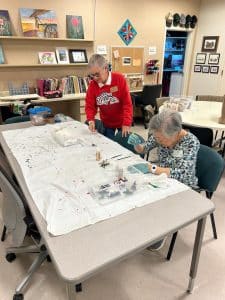
She started by helping out with the landscaping as part of the Gardening Committee, but eventually switched to painting figurines and models. She’s also one of the roughly dozen residents trained as engineers to run the trains.

“It’s such a source of happiness,” Karen says. “So many people love it. There’s a million things to do on the railroad. We spend hours and hours working on little scenarios with the buildings and figurines, painting and refurbishing them. Just to see the joy on people’s faces when they walk in and see the railroad—it’s a magnetic place.”

Intercommittee Collaboration Keeps It Running Smoothly

Garden Railroad Committee

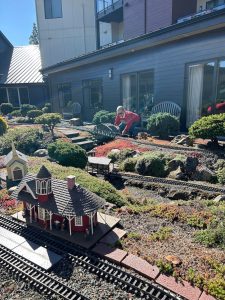
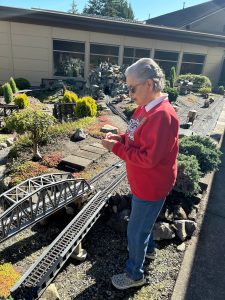
Residents are completely in charge of the garden railroad, including maintenance and repairs. While the Garden Railroad Committee and the Gardening Committee do the majority of the work, residents on other committees have opportunities to be involved as well.

For instance, in 2020, when parts of the track were repaired and new bridges were built, many of the original trees in the garden were removed because they’d grown out of scale. (Dwarf pines weren’t available when the garden was first created.)

A new Bonsai Committee had formed around that time, and with the garden railroad in need of new plants, it was the perfect opportunity for the various committee members to work together. Now, while members of the Gardening Committee still tend to much of the garden’s landscaping, the Bonsai Committee members maintain the plants they’ve contributed.

On Display During the Offseason

The trains run on a regular schedule between Easter and Labor Day, with two-hour runs for residents and guests on all holidays. Karen notes that many residents invite their grandkids, who are thrilled to watch and toot on the wooden whistles they’re given. There are also practice runs every two weeks on Wednesdays.

During the wetter winter months, most of the trains are stored in the train barn. But residents and visitors can still enjoy a mini version of the garden railroad in display cases located in the main common area, near the coffee shop. Observers can “operate” the display with the push of a button.

The committee in charge of the display cases works with the Garden Railroad Committee to ensure they have access to set up and maintain the display, which is different every year. Recently, when the Courtyard Apartments were under construction, a member of the Garden Railroad Committee made a scaled version of a building crane for the display case scenario, which also featured construction crew worker figurines painted to match the outfits their real-life counterparts often wore.

“It’s a lot of fun,” Karen says. “It’s always sparking ideas for new scenes.”  

Calling All Enthusiasts!

Tom Stoebe, who has chaired the Garden Railroad Committee the last couple of years and is also an engineer, has lived at Emerald Heights for 15 years. The railroad committee is the first one he joined after moving to the community.

“The railroad fascinated me, as everyone,” he recalls. “It’s changed a lot over the years, but it’s still the same basic setup.”

Today, the garden railroad has 13 locomotives and 82 railcars, 600 feet of track, 10 bridges, 45 switches, a tunnel that runs through a model of Mount Si and more than 50 buildings. As many as five trains can run on the tracks at the same time, and with a recent upgrade, the trains can switch between main lines and run in opposite directions.

To the best of Tom’s knowledge, it’s the only such railway located in a retirement community and designed, financed, built and maintained exclusively by residents.

One of Tom’s duties as the committee chair is to organize social functions that take place around the garden railroad. This month there will be a welcome event for new Courtyard residents, and he says he’ll try “recruiting” them to the committee.

“It’s an easy sell,” he says with a laugh. “New people come out and look at the train, and say, ‘Oh, I want to be part of that!’”

To get a better idea of just how much work (and fun) is involved in the Emerald Heights Garden Railroad, you can watch this video on YouTube, which was taken several years ago.

Committees for All Kinds of Interest

While the Garden Railroad Committee may be one of the most high-profile groups here at Emerald Heights, there are more than 54 resident-led groups representing a diverse range of interests.

In fact, new residents sometimes have a hard time choosing which ones and how many they want to get involved in. And quite often, newcomers have a unique passion that spurs them to start a brand-new group.

Self-Nurturing With a Social Component

For many older adults, one of the most appealing aspects of moving to a senior living community is the abundance of activities for senior citizens, paired with the opportunity to socialize and expand their circle of friends.

Having such a variety of options gives older adults the chance to try new experiences that can stimulate their intellect, inspire them to be more physically active and tap into their creative potential.

What Strikes Your Fancy?

Is there a hobby or activity you particularly enjoy, or maybe one you set aside while you were busy with career and family responsibilities? If you have more spare time on your hands now that you’re retired, why not get reacquainted with a previous pastime or try a few new ones on for size?

These suggestions might stir some interest or serve as a springboard for other ideas.

Easy Hobbies for Seniors

  • Writing
  • Sketching
  • Painting
  • Birdwatching
  • Reading
  • Puzzles
  • Wine tasting
  • Dance lessons
  • Photography
  • Antiquing
  • Pottery making

Hobbies for Seniors at Home

  • Cooking
  • Decorating
  • Playing a musical instrument
  • Flower arranging
  • Gardening
  • Studying a new language
  • Taking online courses
  • Sewing, knitting, quilting and other textile arts
  • Scrapbooking
  • Genealogy

Looking for ideas?

Ultimately, the best hobbies for seniors are ones that can contribute to their mental, physical and social well-being—while serving up a healthy dose of enjoyment.

Would you like to see our garden railroad and learn more about our community? We’d be happy to show you around. Contact us to arrange a visit or call 866-822-0916.

Featured Images: Emerald Heights, 2024

For Retirees, Living Spaces Are Not ‘One-Size-Fits-All’

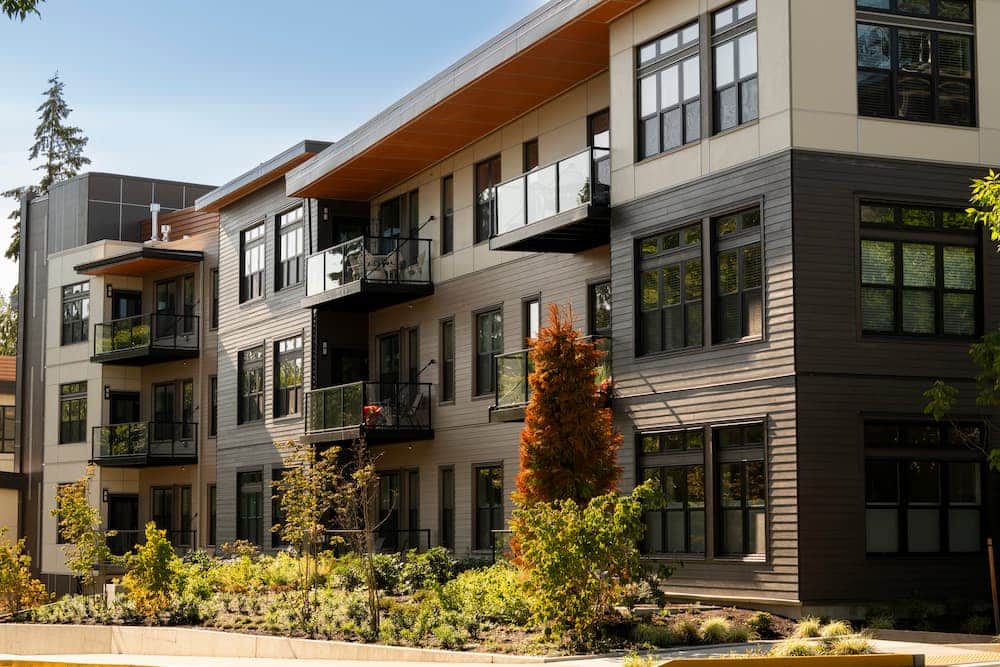
one bedroom apartments at Emerald Heights

Retirement ushers in a new chapter in life, and this new chapter can look quite different from one person to the next. Some retirees use their newfound leisure time to travel far and wide. For them, home is mostly a base where they keep their belongings.

Others pour their time and energy into hobbies and special interests, volunteer work or being with friends and family. They also may not spend much time at home.

But some retirees actually spend more time in their home than when they were working. Some take delight in hosting dinner parties and celebrations on a frequent basis. Some look forward to stepping up their role as grandparents, regularly inviting the grandkids over to share quality time together.

Still others prefer their home to be a cozy retreat where they feel protected and free from worry.

Just as older adults’ lifestyles vary, so do their wants and needs with respect to their living spaces. For this reason, most senior living communities offer a variety of options, including apartments in a range of floor plans and square footage.

For many seniors, apartment living—with its convenience and efficient use of space—is precisely the right fit.

Rightsizing to an Apartment Home

It’s not unusual for older adults to find they no longer need (or want) all the space in the home they’ve lived in for many years. This can be true even for those who already moved to a smaller place after the kids grew up and left home. 

Are there rooms in your home that don’t get used much, or maybe not at all? Are you using rooms and closets to store a lot of stuff you don’t really need anymore?

Larger homes come with higher utility bills, plus there’s more to clean and maintain. And if mobility becomes an issue, moving around in a big house can be challenging, especially if there are stairs.

Most of these concerns vanish if you move to a senior living community, where professionals take care of all the maintenance and landscaping, and housekeeping services are readily available.

In addition, residences in senior living communities are designed for ease of navigation and to help reduce the risk of falls.

While some retirement communities offer cottages, townhomes and other types of residences, the vast majority of living spaces in senior communities are apartment homes. Depending on the community, apartment floor plans can range from studios to three bedrooms with a den.

The Advantages of 1-Bedroom Apartments for Seniors

One-bedroom apartments for seniors may be an ideal option for those who are single and for couples who are on the go a lot of the time. Some communities offer one-bedroom apartments with a den that can be used as a home office, a room for hobbies or reading, or even as a second bedroom. 

Here are some excellent reasons to consider senior one-bedroom apartments:

  • They’re more affordable. If you don’t need the extra space, why pay for it? Selling your current home and choosing a one-bedroom apartment will leave you with more to spend on travel and activities you enjoy, or more to set aside for the future. Plus, as noted earlier, your power bill will be lower than if you chose a larger apartment or other type of dwelling in the community.

  • You’ll pay less for amenities. Most senior living communities offer an assortment of amenities, which can include fitness facilities with exercise classes, spas and salons, swimming pools, arts and crafts rooms, game rooms, educational classes, woodworking shops, theaters and much more. Monthly fees and entrance fees are based on residence size, but residents throughout the community have access to the same amenities. So those who live in one-bedroom apartments pay less to access certain amenities as compared with residents living in larger homes in the community.

  • It’s easier to stay organized. When moving into an apartment home, most older adults use the opportunity to pare down their belongings—which can have a positive effect on mental health. Choosing a smaller living space can help you focus on the items that are most important and those that have the greatest value to you. It can also squelch the temptation to start accumulating more stuff after you move. Sometimes less is better.

  • You’ll have a whole community outside your front door. If the idea of living in a one-bedroom apartment seems like it would be a big adjustment, look at it this way: Everything the community offers is an extension of your home, including the gathering spaces, gardens, dining venues, walking paths, fitness facilities and more. Most communities also have a private dining room residents can use for family get-togethers and other occasions. And you’ll have new neighbors who just might become great new friends!

Why This Resident Loves Her Courtyard Apartment

At Emerald Heights, we welcomed the first residents into their beautiful new Courtyard Apartments earlier this year. One of them was Monica Chun, who came to live in our community in June 2023 after her husband died. Monica’s parents had moved to Emerald Heights in 2005, and her mother was still living here when Monica decided to join us.

After her mother passed, Monica felt ready for a change. So, when one of our team members mentioned that a few of the new Courtyard apartments were still available, she decided to take a look. Monica chose a one-bedroom apartment on the third floor, which is the top floor in her building.

“It has changed my whole life,” Monica says. “Moving to Courtyard has been wonderful. I love my apartment. The high ceilings, the big, lovely windows with lots of light coming in, the island in the kitchen with plenty of counter space—it feels like a smaller version of the home I loved in Kirkland.”

Monica notes that she has a beautiful view of evergreens and deciduous trees, which is one reason she chose that specific apartment. She says another apartment she visited recently on the other side of the building “felt like a treehouse” because of the views.

“This is what I wanted. I love New York City, and this reminds me of a New York loft. I set up my living room and dining room so I can be washing dishes, watching the TV and watching the rain outside. My living room goes out to the patio. I love sitting out there and watching the rain at night.”

Monica was born in Hawaii and lived there for 39 years. She and her husband honeymooned in Washington and liked it so much they decided to try living here for a year in the late ‘90s. They wound up loving it and stayed.

“It’s so easy to travel to the Pacific from here, and to the East Coast. And I’ve been to Europe twice this year.”

At 64, Monica is one of the youngest residents at Emerald Heights. While she enjoys participating in classes at the fitness center, learning to play mahjong and hiking, she has also resumed teaching elementary school students, though she only substitute teaches for friends.

“I love teaching. I only retired so my husband and I could travel more.”

Although things didn’t work out as planned, Monica says she’s back to feeling happy again.

“One of the reasons I chose Emerald Heights is, I realized with both of my parents and then seeing my husband get sick so suddenly, you can’t predict any of these aging things, no matter how healthy you are. I feel very safe here. I feel like I’ll be taken care of, if something happens. I won’t be in a house alone. I’m happy here.

“I’ve learned you really, truly have to enjoy every day. I’m so happy I moved to this apartment.”

Come to the Courtyard

Wondering if you’d be happy at home in an Emerald Heights apartment? There’s a great way to find out: Visit us.

Come see all our community has to offer and get a feel for what your life would be if you lived here. To set up a visit,contact us or call 866-822-0916.

Featured Image: Jeremy Hess, 2024

With So Many Reasons To Retire in Washington, What Are You Waiting For?

seniors living in washington state for retirement

If you’ve been searching for the best places to retire on the West Coast, you may have scratched many cities in California off your list for various reasons. As a result, you may have turned your focus to the best places to live in the Pacific Northwest.

Let’s take that a step further and look at some of the top reasons and best places to retire in Washington state.

Washington Offers Many Advantages for Retirees

Tax benefits and access to top-notch healthcare are just two of the boxes Washington is likely to check on your retirement-living checklist. Here are more details on those and other advantages Washington offers over other retirement options, and why Emerald Heights, located in Redmond, Washington, might be a good fit for you:

  • Favorable tax laws for seniors. There’s no state income tax in Washington; therefore, the state does not tax Social Security or pension income, or withdrawals from retirement accounts, according to SmartAsset. Nor will you have to pay state income tax in Washington if you plan on working part time after you retire. Washington also excludes estates valued at $2.193 million or less from inheritance tax.

  • World-class healthcare. The University of Washington Medical Center, about 35 minutes from Emerald Heights, is consistently ranked at or near the top of the state’s best hospitals and earns high placement in national and global rankings. Washington took the No. 7 spot on United Health Foundation’s 2023 list of America’s Health Rankings, which considered 87 measures across five health categories. By comparison, Oregon placed at No. 21 and California placed at No. 28. 

  • Relatively mild climate. Yes, it rains a lot in parts of Washington. The eastern part of the state, sometimes called Washington’s Wine Country, has more of a desert climate, with warmer temperatures and less precipitation overall than the western part of Washington. If you enjoy living in an area that experiences a distinct change for all four seasons, where you won’t have to run the air conditioning half the year or trek around in the snow for several months each winter, Washington may be just the right place for you. (If you enjoy skiing or other snow sports, you could always venture out to the Cascade Mountains.)

  • Less prone to natural disasters. Although Florida and states throughout and adjacent to the Southeast are popular retirement destinations, that region of the country has historically experienced more hurricanes, flooding and tornadoes — and these occurrences have worsened in recent years. While the West Coast tends to have more earthquakes and wildfires than most of the rest of the U.S., the severity of these natural disasters is typically much worse in California than in its northern neighbors.

  • Encourages healthy living. From the lush coastline to the snow-capped Cascades, Washington offers spectacularly scenic naturescapes, making the state a paradise for outdoor enthusiasts of all ages. Pair these landscapes with a bevy of beaches, state and municipal parks, hiking and biking trails, walking paths and waterways where you can go fishing, swimming, sailing and kayaking, and you have almost limitless opportunities to maintain an active lifestyle. You’ll also find an appealing selection of farmers markets where you can buy fresh, locally grown and organic food. And in cities large and small throughout the state there are fascinating museums, theaters, galleries, live music performances (including free outdoor concerts), festivals and a multitude of other ways to stimulate your mind and social spirit.  

Living in the Evergreen State Can Help Keep You Feeling Ever Young

According to a research brief by Nature Sacred, a nonprofit foundation that works with urban communities to create public sanctuaries, the amount of green space in a neighborhood is positively associated with the health status of older adults, and the aesthetic quality of nearby open spaces is related to their life satisfaction. Emerald Heights boasts an abundance of green spaces to support our residents’ health and life satisfaction.

The brief cites studies of older adults showing that spending time outside in green spaces, whether it be in a forest or a city park, has the potential to:

  • Increase longevity
  • Ward off health complaints such as musculoskeletal pain and sleep problems
  • Decrease levels of the stress hormone cortisol
  • Protect against depression
  • Prevent or reduce fear of falling
  • Support mental health and well-being
  • Improve cognition
  • Encourage social interaction

Research has demonstrated that even looking at a natural landscape from a window can lower one’s blood pressure and heart rate, promoting a sense of calmness.

There’s no shortage of stunning green places and spaces in Washington where you can drink in the views—and the tranquility of nature. The state also boasts plenty of blue spaces, or natural settings featuring a body of water, that can similarly benefit mental health and well-being.

Choices for a Range of Retirement Budgets

If you’re looking for affordable places to live in the Pacific Northwest, you’ll discover that many of Washington’s cities fit the bill. Spokane, Vancouver, Yakima, Sequim, Olympia, Wenatchee and Walla Walla are among those that are frequently featured in online search results for affordable places to live in Washington state.

This is by no means an exhaustive list, and the lack of state income tax can offset other cost-of-living factors no matter where in Washington you might like to live. So, really, you can focus on finding the right place based on your personal preferences, interests and needs, and then see how it fits into your financial framework for retirement. Emerald Heights offers a FloorCaster tool, which allows you to determine which cottages and apartments fit your budget.

If you’re considering moving to one of the active senior living communities in Washington state, keep in mind that expenses such as utilities and meals may be included in the monthly fees.

Reasons To Place Redmond on Your Retirement List

Sure, we may be a bit biased, but we believe Redmond is among the best places to retire in the Pacific Northwest. Check out some of our reasons and see if you agree:

  • The natural beauty is absolutely striking.
  • With a population of approximately 77,000 and its proximity to Seattle, the city boasts an urban-suburban feel.
  • It’s often referred to as both a hub for innovation and a haven for outdoor enthusiasts.
  • The bustling downtown center is juxtaposed with more than 70 scenic trails for hiking, biking, birding and appreciating Mother Nature. There are also 47 parks, the Sammamish River, Lake Sammamish and multiple other nearby waterways.
  • Mt. Rainier is only a few hours away.
  • There’s an ample and diverse array of cultural, entertainment, dining and sports venues in Redmond and the surrounding cities. And plenty of places to get a great cup of coffee!
  • An assortment of festivals, outdoor movies and free concerts make summers in Redmond fun for people of all ages.
  • Average high temperatures in the summer stay in the 70s and the average low temperatures in the winter are in the upper 30s. The city gets an average of between 4 and 5 inches of snow per year.
  • Seattle-Tacoma International Airport is less than an hour’s drive away.
  • It’s where you’ll find the vibrant and vivacious residents of Emerald Heights.

There’s no better way to discover how much you could love living your retirement years at Emerald Heights than to visit us.

Come have a look around. Meet our staff, and talk with our residents. Sample our cuisine and check out our activities calendar. See how we’ve updated our campus and what’s still in store. Picture yourself as part of our community. We think you’ll like what you see.

Contact us to set up a visit or call 866-822-0916.

Featured Image: Pressmaster / Shutterstock